Character prompt
Kaelor Dawnveil
Generate character, city, kingdom, guild, and artifact names with consistent tone for RPGs, writing, and worldbuilding.
Live output
Generator Brief
A strong fantasy name should read well aloud, fit its culture, and avoid accidental franchise echoes. Start with naming lane and tone first, then use culture and length to keep the whole project coherent before you branch into more specialized pages.
Naming Atlas
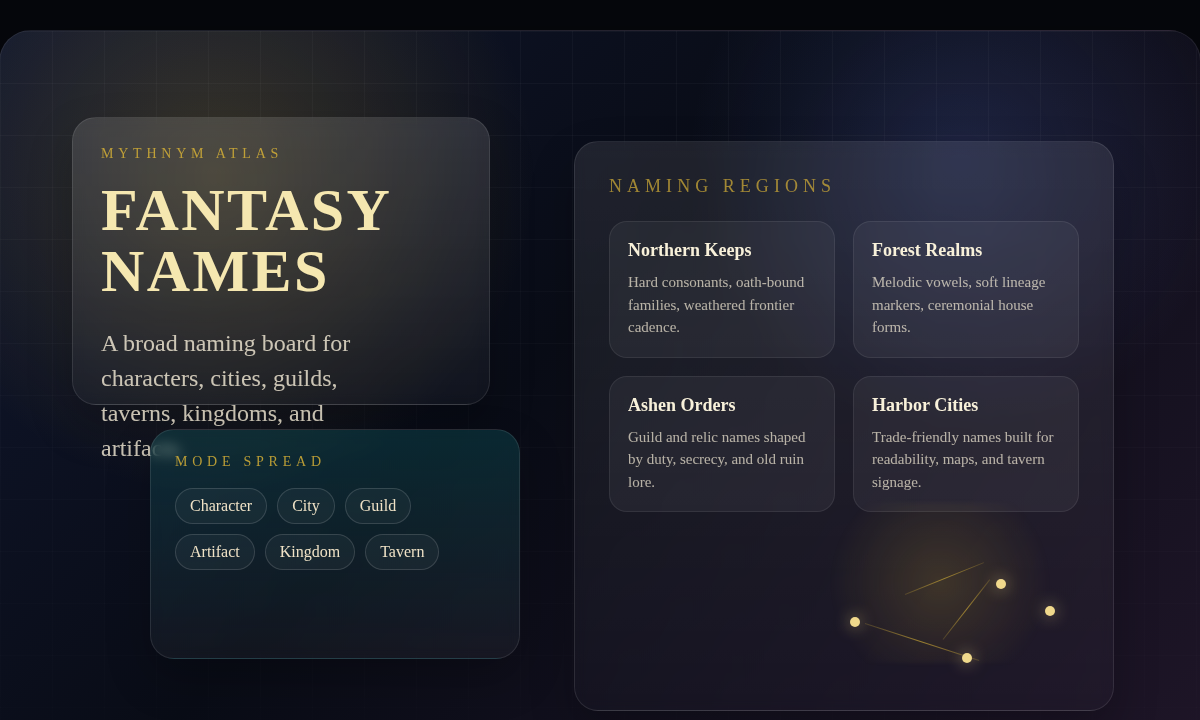
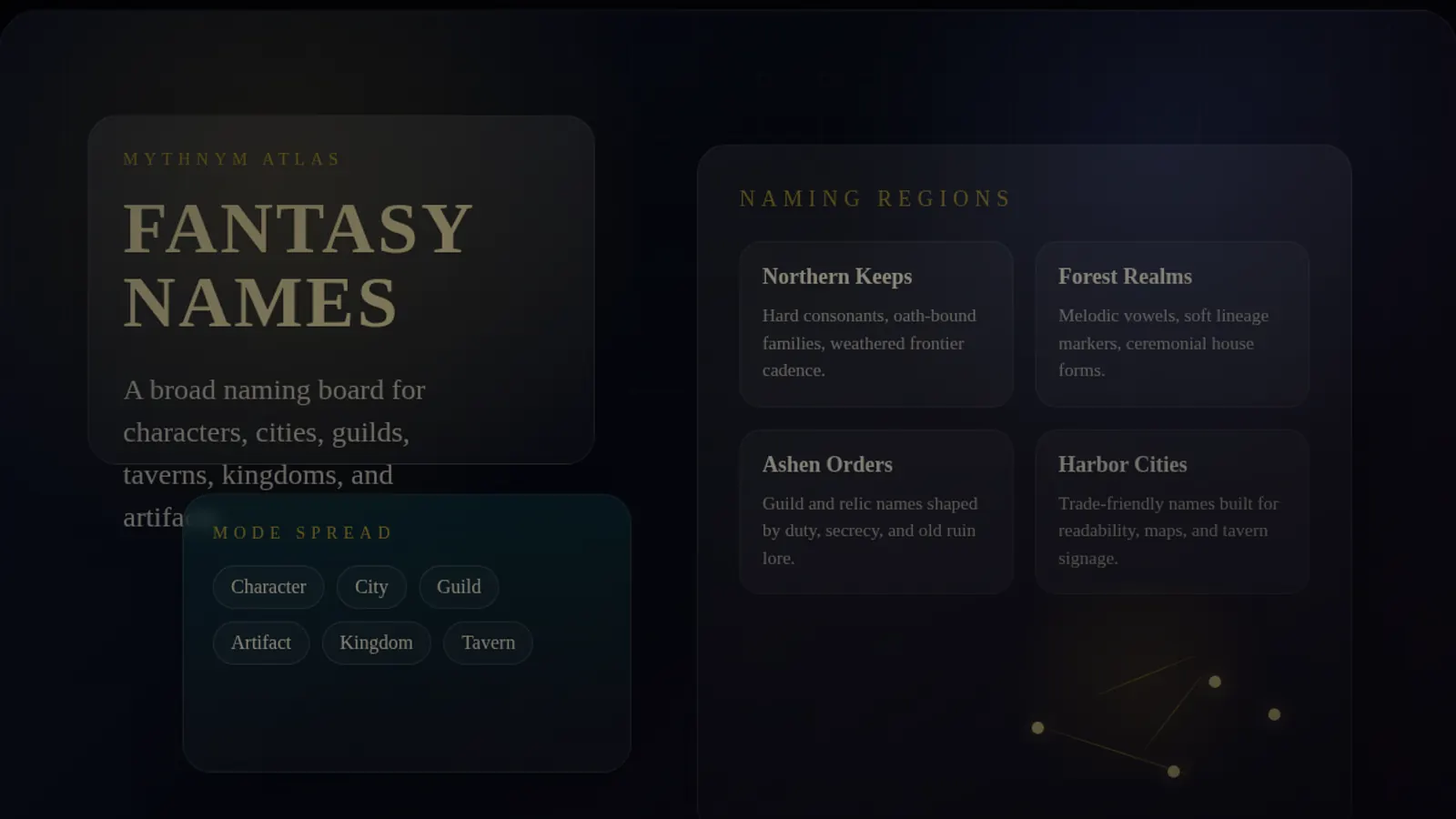
Fantasy naming atlas showing distinct lanes for characters, cities, guilds, kingdoms, taverns, and artifacts.
A broad visual map for choosing the right naming lane before you narrow into a specialist generator.
Broad Entry Tool
Use Fantasy Names when you are still deciding whether the next name belongs to a hero, a city, a guild, a kingdom, or an artifact. Once the lane is clear, follow the specialist link so the next batch uses tighter rules and narrower examples.
Structure Guide
If a name is hard to pronounce, shorten it or reduce repeated consonants.
Use the same culture inspiration across a region to make your map feel real.
Aim for fresh syllable patterns instead of near-copies of iconic franchise names.
Choose Character/City/Kingdom/Guild/Artifact first; style will carry the mood.
Short names read rugged; longer names often feel noble, ancient, or ceremonial.
Worldbuilding Utility
Designed for fast iteration: generate 10 names per batch, keep results in history, and copy or favorite the ones that fit your story.
Names are generated through AI so you can describe tone, era, and vibe in plain language.
Switch between character, city, kingdom, guild, artifact, and tavern naming without leaving the page.
Generate 10 names at a time and keep history scrollable for quick comparison.
Top options stay visible; deeper controls live in Advanced to keep the generator compact.
Select multiple names, copy line-by-line, or favorite them for later use.
Prompts encourage fresh, non-derivative names suitable for commercial and personal projects.
Cross-Surface Examples
These examples show why Fantasy Names works best as a first-pass world anchor: one tool can cover characters, settlements, factions, artifacts, and inns before you split into narrower generators.
Workflow Questions
It supports character names, city and settlement names, kingdom or realm names, guild and order names, artifact or item names, and tavern or inn names.
Pick a culture inspiration and style for a region, then generate batches using the same settings. Fantasy Names is especially useful early in a project because it lets multiple naming surfaces inherit the same broad sound before you split into specialist tools.
Yes. The generator is designed to produce original combinations. For brand usage, it is still smart to check trademarks, published titles, and product naming conflicts before release.
No. The AI prompt is optional. Leave it blank for a default style, or add one short directional hook such as “ancient desert empire” or “cozy tavern in a snowy village” to bias the batch without overconstraining it.
Use Fantasy Names when you still need a broad naming lane for multiple surfaces in the same project. Switch to Elf when race-specific cadence matters, City when settlement role matters most, Demonym when you need inhabitant forms, and Roblox Myth when the goal is an eerie dossier-style persona rather than general fantasy worldbuilding.
Staying broad for too long. Once the problem becomes clearly about one lane—such as elven lineage, city hierarchy, or inhabitant labels—you will get better output by moving into the specialist page instead of forcing one general tool to do everything.
Next Naming Lanes
Elves, dragons, wizards, and RPG heroes
Cities, kingdoms, taverns, and more
Magic weapons, artifacts, guilds, and legendary items
Learn the naming principles behind readable fantasy characters, places, and artifacts
Use a step-by-step naming workflow for writers, GMs, and indie game teams
Review pronunciation, fit, and differentiation before locking a name shortlist