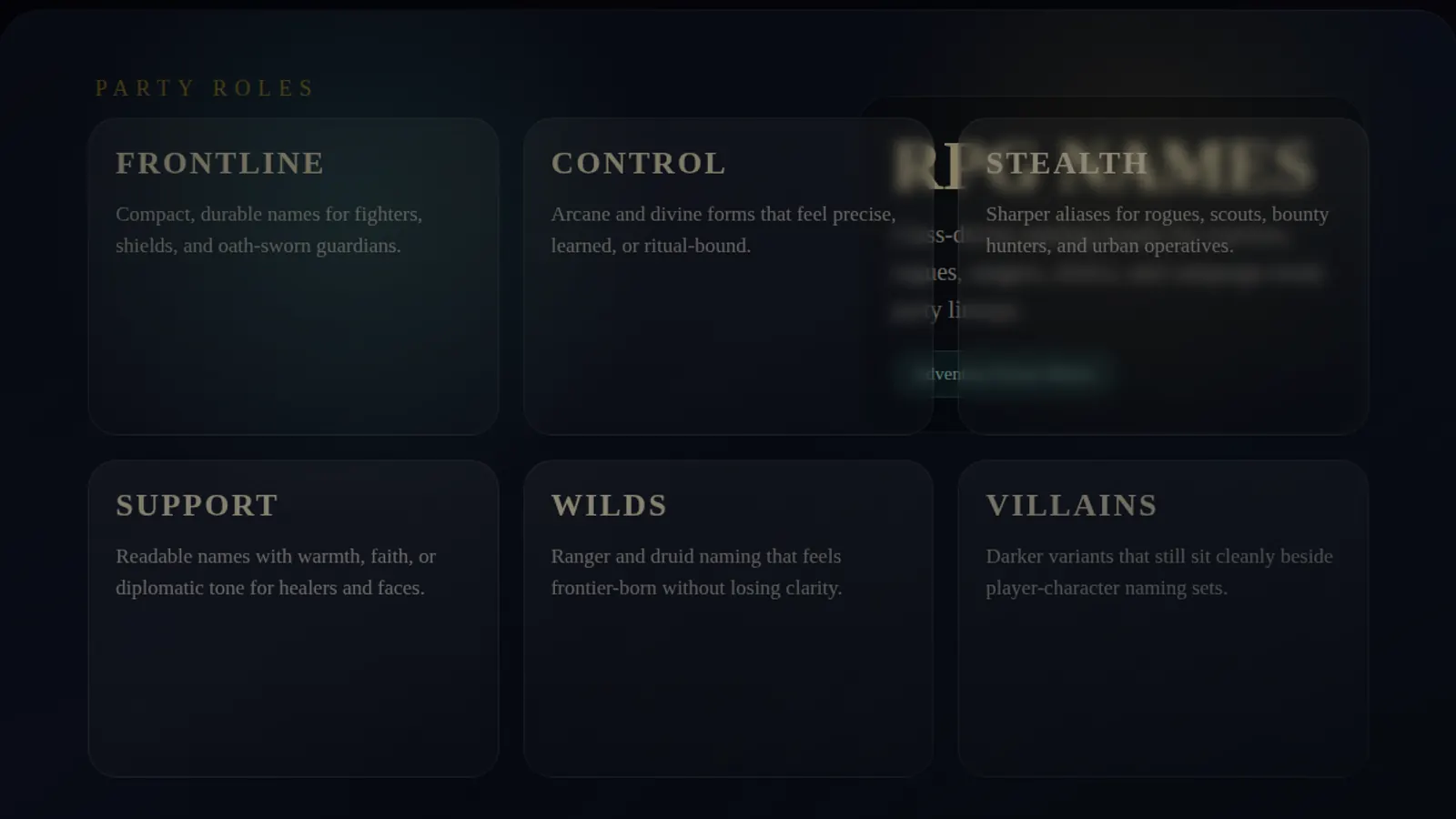
RPG party roster board with class cards, alignment notes, and playable character name lanes.

RPG Name Generator

Create epic character names for your role-playing adventures

Choose lineage, role, and cadence.

"Select your preferences and click generate to create unique RPG character names"

Advanced

Your Generated RPG Names

Party roster preview

An RPG party batch is ready on load so you can compare warriors, rogues, casters, and support roles before rolling again.

Instant local results

Generator Brief

How to Build a Party Roster That Reads Like a Campaign

Use our RPG name generator when you need heroic character names for parties, NPCs, rivals, and campaign one-shots. MythNym is built for tabletop and fantasy role-playing, producing names that feel class-aware, readable, and ready for play. Whether you are naming a paladin, rogue, mage, or ranger, this page gives you fast options without flattening every character into the same archetype.

Class-Ready Rhythm

RPG character names benefit from clear class-flavor. Use tone controls to push heroic, gritty, or mystical sounds so warriors, rogues, and casters feel distinct yet world-consistent.

Why This Party Tool Works

Character naming in RPGs needs enough variety to support full parties, recurring NPCs, and rival factions. MythNym blends classic fantasy naming with role-aware flavor so warriors, clerics, rogues, and mages feel distinct while still belonging to the same campaign world.

How to Shape Better RPG Names

Choose the character type or tone you want first, then adjust gender and batch size to widen or narrow the pool. If you are building a full party, keep one tonal palette for cohesion. If you are naming a standout protagonist or villain, run several batches and keep the result that best matches their class, status, and backstory.
  • Select gender preference or keep the list broad
  • Generate several batches to compare tone and class fit
  • Shortlist names that work for the character's role and party balance
  • Copy your favorites for session prep or sheet building
  • Generate again if you need alternates for NPC families or factions

Built for Tabletop Campaigns and Fantasy Systems

Players use this page for D&D and Pathfinder characters, Dungeon Masters use it for tavern patrons and quest givers, and developers use it for broad fantasy RPG naming needs. It adapts well to heroic, dark, and high fantasy settings when you need quick but playable character names.
Structure Guide

RPG Character Cohesion

Party Naming Rules

Class Consistency

Warriors, rogues, and clerics should feel distinct.

Region Matters

Let place culture influence personal names.

Rank Signals

Use length and formality to indicate status.

Table Controls

Generate Party Sets

Create a full group with one shared tonal palette.

Reserve Unique Sounds

Save rare clusters for protagonists.

Add Nicknames

Use short epithets to improve table recall.

Archetype Roots

Use these as party-roster anchors
Stone Shadow Dawn Raven Iron Sage

Visual Cue

rpg names sigil
A lightweight visual marker for this generator’s tone.

Sample Patterns

Example RPG Names & Their Styles

Use these examples as table-ready roles, not only heroic labels. A warrior, rogue, cleric, ranger, mage, villain, and side NPC should have different cadence so the party roster is easy to say and remember during play.

Aldric Ironforge

Meaning: Noble ruler of the forge

Origin: Warrior

A strong name for a dwarven fighter or paladin, suited to tank characters and defenders.

Male

Aria Stormborn

Meaning: Melody born of tempest

Origin: Mage

Ideal for a sorcerer or wizard specializing in elemental magic, especially lightning spells.

Female

Drake Shadowblade

Meaning: Dragon of the hidden blade

Origin: Rogue

Suited to an assassin or thief character, suggesting stealth and deadly precision.

Male

Luna Lightbringer

Meaning: Moon that brings illumination

Origin: Cleric

A divine name for a healer or support character. Suggests wisdom and holy power.

Female

Thorne Dragonslayer

Meaning: Sharp defender against dragons

Origin: Warrior

An epic name for a legendary hero or high-level fighter with a storied past.

Male

Sage Windrunner

Meaning: Wise one who runs with wind

Origin: Ranger

Works well for a ranger or druid character, suggesting connection to nature and swift movement.

Neutral

RPG Name Styles by Character Class

Class Name Style Common Themes Example Names Best For
Warrior/Fighter Strong, bold, martial Iron, steel, blade, shield, strength Aldric Ironforge, Thorne Dragonslayer Tanks, melee fighters, paladins
Mage/Wizard Mystical, elegant, arcane Storm, star, flame, frost, spell Aria Stormborn, Lucian Starweaver Spellcasters, sorcerers, wizards
Rogue/Thief Sharp, shadowy, cunning Shadow, blade, night, swift, silent Drake Shadowblade, Raven Nightwhisper Assassins, thieves, scouts
Cleric/Priest Divine, holy, radiant Light, holy, divine, blessed, sacred Luna Lightbringer, Helena Holyshield Healers, support, divine casters

Practical Heuristics

Tips for Choosing the Perfect RPG Name

Match Name to Class

Warriors need strong names (Ironforge, Stormborn), while mages prefer mystical names (Starweaver, Spellbinder).

Consider Character Background

A noble paladin might have a regal name, while a street rogue could have a simpler, edgier name.

Think About Pronunciation

Choose names that are easy to say during gameplay. Your party will thank you.

Use Meaningful Surnames

Surnames like Dragonslayer or Lightbringer hint at your character's destiny or achievements.

Keep It Memorable

The best RPG names are easy to remember and distinctive enough to stand out in your party.

Class x Tone Matrix

Build names that help a whole party feel coherent, not cloned

RPG naming becomes generic fast when every class shares the same rhythm. A better approach is to keep one campaign-wide cultural palette, then let each class shift the edge, softness, or formality of the result.

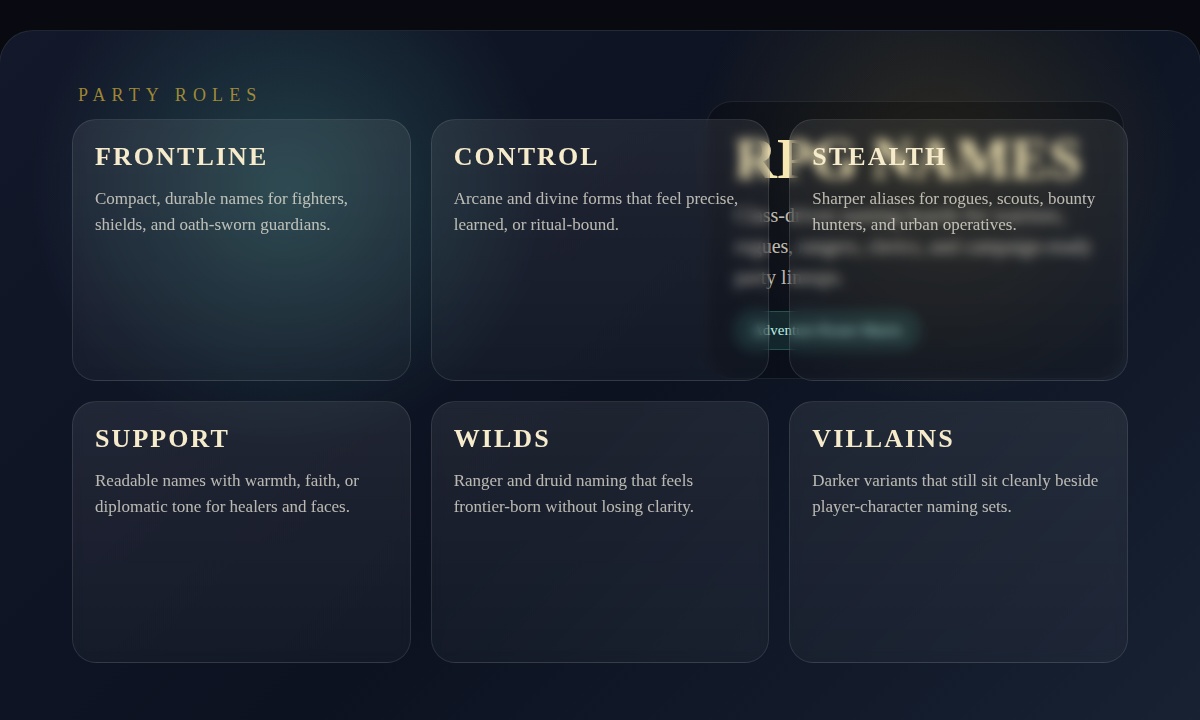
RPG party naming matrix showing frontline, stealth, support, control, wilds, and villain naming roles.

Adventure Roster Matrix

RPG party naming matrix showing frontline, stealth, support, control, wilds, and villain naming roles.

A class-driven naming board for party balance, NPC sets, and readable campaign rosters.

Frontliners can take shorter, weight-bearing names that sound dependable at the table.
Rogues and scouts benefit from sharper endings or cleaner alias-style surnames.
Clerics and diplomats often read best with brighter cadence and stable, memorable syllables.
Mages and lore-heavy characters can absorb extra complexity, but should still stay pronounceable for live play.

Fantasy vs RPG

Use RPG Names when the output must play well at the table

Fantasy Names is a broad ideation lane. RPG Names is narrower: it should produce playable characters, NPCs, and party rosters where class signal, pronunciation, and table recall matter.

Use RPG Names for D&D characters, Pathfinder builds, NPC lists, party rosters, rivals, and class-based casts.
Use Fantasy Names when you are still naming mixed surfaces such as cities, guilds, kingdoms, artifacts, and character sketches together.
Class lens matters because warriors, rogues, clerics, rangers, and mages should not all carry the same rhythm.
Table recall matters; a name that looks ornate but nobody can say during play is usually weaker than a cleaner result.

Roster Checklist

Keep the name playable after it leaves the generator

RPG names should survive character sheets, initiative calls, session notes, and NPC lists. A result that looks impressive but slows down the table is weaker than a clean name with class signal.

Hero names should be easy to introduce aloud and distinct from the rest of the party.
NPC names should be short enough for quick recall, especially shopkeepers, rivals, captains, and quest givers.
Villain names can carry more ceremony, but still need one memorable root the table can repeat.
Faction-linked characters work best when surname, title, or epithet hints at guild, kingdom, deity, or order identity.

Why It Works

Why Use Our RPG Name Generator?

Combines heroic naming traditions with flexible options for tabletop players, Dungeon Masters, and fantasy RPG builders.

Tabletop Rosters

Works for D&D, Pathfinder, and fantasy RPG casts where player characters, NPCs, rivals, and hirelings need distinct roles.

Class-Appropriate Names

Names suit warriors, mages, rogues, clerics, and all character classes with heroic and memorable qualities.

Batch by Class Role

Generate up to 20 RPG names at once, then compare class, ancestry, party role, and campaign tone before choosing.

Campaign-Ready

Each name is ready to use in your campaign, with surnames that suggest character background and destiny.

For Players & DMs

Draft player characters, NPCs, villains, and entire adventuring parties quickly without giving every role the same cadence.

Save Party Shortlists

Save party rosters, rival NPCs, and class-based name sets so future sessions keep the same campaign tone.

Field Notes

Frequently Asked Questions

Can I use these names for my D&D character?

Yes. Use them for tabletop characters, NPCs, rivals, and one-shot casts. For published work or branded characters, still check for conflicts with existing names.

Do the names work for all character classes?

Yes! Our generator creates versatile names that work for warriors, mages, rogues, clerics, and all other RPG classes. The surnames especially reflect heroic qualities suitable for any class.

Can I modify the generated names?

Of course! Feel free to mix and match first and last names, adjust spellings, or use them as inspiration for your own variations.

Are these names suitable for NPCs?

Yes! Dungeon Masters can use this generator to quickly create names for NPCs, villains, and entire adventuring parties.

How do I choose between male and female names?

Select the gender option that matches your character concept. Many names can work for any gender with slight modifications.

When should I use RPG Names instead of Fantasy Names?

Use RPG Names when the name needs to function at the table or in a game roster: class-readable, pronounceable, and suited to parties, NPCs, villains, or one-shot characters. Use Fantasy Names when the project is still broad and may include places, factions, artifacts, or mixed worldbuilding surfaces.